

A Comprehensive Readable Guide – June 2026
Intro
The general process of gaining planning permission has remained the same over the last 10 years, the contextual emphasis has been environmentally focused whilst accelerating housing and infrastructure. The process still requires an application, consultation, assessment and a decision. The ‘service’ provided by local authority planning departments has reduced significantly, being more of a checking body than a proactive assistant. The latest range of changes has removed the free resubmission, the ability to engage and make changes all whilst increasing the application fees.
However, this guide is intended as an up-to-date guide on how to navigate the current planning system in its current form. It does not question or criticize the system, unlike our planning reform blog.
The last 10 years have become more digital with less human interaction, environmentally aware, geared toward housing with more evidence and specialist consultant reliance.


Changes of note
Permitted Development
Greater use of Permitted Development for larger home extensions, office to residential, barn conversions, additional storeys, commercial to retail etc.
Environmental
Stronger Environmental Requirements, ecology was often a specialist issue affecting only sensitive sites. Today, environmental considerations are far more prominent. This includes biodiversity impacts, habitat protection, water management, carbon reduction, climate resilience.
Biodiversity Net Gain (BNG)
Introduction of BNG is perhaps the most significant recent change, made mandatory in 2024.
Key requirements:
- Most developments must achieve at least 10% improvement in biodiversity value.
- Developers must submit a Biodiversity Gain Plan.
- Habitat gains can be delivered on-site, off-site, or through biodiversity credits.
- Habitat improvements must be maintained long term.
Impact on planning
Developments that previously only required architect drawings could now require more specialist consultants’ input such as ecologists, habitant surveys, biodiversity metric calculations, long term habitat management plans.
More digital planning systems
Online submission for the planning portal, electronic consultations, public access to plans and comments online, digital planning registers
Design Quality Emphasis and Justification
The planning system does place more emphasis on design quality with justification in accordance with relevant policies and local authority guides.
Changes include
- Concise written planning and heritage statements
- National design guides
- Design codes
- Stronger requirement for place making
- More scrutiny of appearance, materials, layout and streetscape
Increased Focus on Housing Delivery
Successive governments have pushed reforms aimed at increasing housing supply, the population and immigration continue to drive housing shortfalls
This has resulted in:
- Pressure on councils to maintain up-to-date local plans.
- Greater emphasis on housing targets.
- Faster decision-making expectations.
- Revisions to national planning policy.
The balance has shifted toward encouraging development where housing shortages exist.
More Specialist Reports Required
Planning applications are more likely to require specialist reports to support and justify them
Common reports now include
- Ecology reports.
- Biodiversity Net Gain assessments.
- Flood Risk Assessments.
- Drainage strategies.
- Transport statements.
- Tree surveys.
- Heritage assessments.
- Sustainable drainage systems (SUDS)
Flood and Drainage Scrutiny
With the ever-increasing risk to floods and antiquated treatment plants for sewage and water monitoring and managing waste and water is more sensitive.
Increased Community Visibility
Public engagement has become easier because applications, drawings, consultation responses and decisions are generally available online.
This means:
- Faster public access to proposals.
- Easier submission of objections and support.
- Greater scrutiny of planning decisions
The Planning Process
Though fundamentally the same there are significant differences in the team required to prepare, investigate, design and write supporting documents. Where a simple home extension can be dealt with by an architect or experienced architectural design technician alone, a more complex development requires a wider supporting team of specialists.
We will explain the process on a medium sized development, note some areas will require more or less consultant input.
CK Architectural provides comprehensive advice in its first Step ‘concept and feasibility’
1. Check if planning permission is needed
Some works are covered by Permitted Development Rights and do not require a planning application. Larger developments, changes of use, or developments in protected areas often require permission.
2. Seek pre-application advice (optional)
Many applicants discuss proposals with the Local Planning Authority (LPA) before submitting, this is typically submitting your design drawings and planning statement. This helps identify potential issues early and can improve the chances of approval.
3. Prepare and submit the application
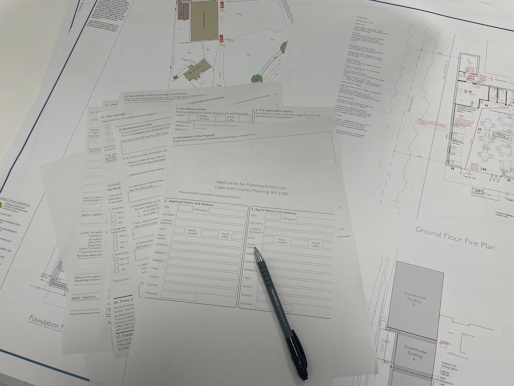
Produce planning drawings meeting the validation requirements, write supporting documents with reference and justification to the relevant policies, collate consultant information and submit via the planning portal. The application fee will then be required.
4. Validation by the LPA
Before a case number, decision date and planning officer is attached to the application the plans and documents will be checked to ensure all required information is provided in the right format.
Once complete, the application is formally registered, upload to the public access website and validated.
5a. Public consultation
The first phase is notifying the neighbours, parish councils, and relevant/effected organisations. The public are usually given at least 21 days to submit comments, objections, or support.
5b. Statutory Consultees (required by law)
These organisations must be consulted based on the specific nature and location of the development.
Examples include:
- The Environment Agency: For developments in flood risk zones or those involving hazardous substances.
- Natural England: If the site affects protected wildlife, Sites of Special Scientific Interest (SSSIs), or national landscapes.
- Historic England: When a project impacts a listed building or scheduled monument.
- National Highways: For developments that may impact trunk roads or the strategic motorway network.
- Lead Local Flood Authorities: For major developments managing surface water and drainage.
- Water & Utility Companies: To ensure infrastructure can support the new development.
- The Coal Authority: If the site falls within historical coal mining areas.
5c Local and non Statutory Consultees
- Parish or Town Councils: Local town councils represent the immediate community and review applications to provide formal feedback to the planning authority.
- Local Highway Authorities: They assess the development’s impact on local traffic, parking, and road safety.
- Environmental Health: They review internal aspects like noise, air quality and contamination
- Conservation Officers: Generally, teams within the planning department specialised in protecting special interest, historic and listed buildings.
6. Technical assessment
Planning officers assess the proposal against the National planning policy, Local planning policies, Design and appearance. Then considers public consultant comments and all relevant consultees.
7. Decision
The application is decided either the planning officers under delegated powers, or by a planning committee for more significant or contentious cases.
The outcome will be:
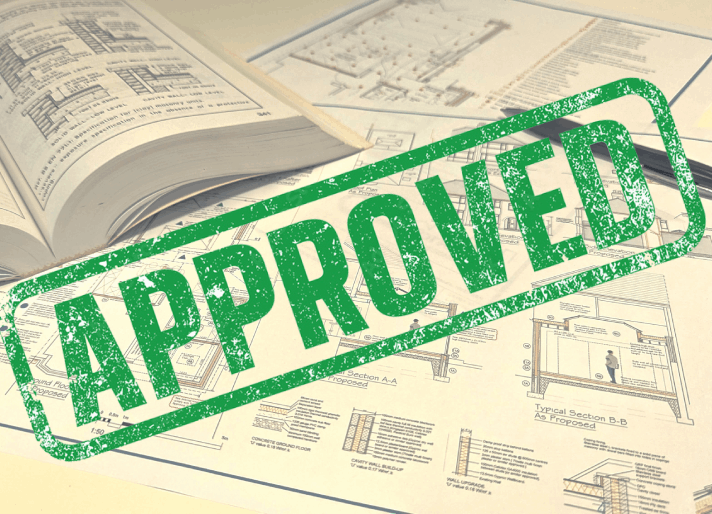
- Approved
- Approved with conditions
This will be provided by a letter with written explanation of the reasons behind the decision
8. Discharge of conditions (if applicable)
Many approvals contain conditions that must be satisfied before work starts or before occupation. Some conditions require additional design, reports etc and other simple adherence during the build.
9. Appeal (if refused)
Applicants can appeal a refusal, conditions imposed, or non-determination within the relevant time limits. The appeal is normally decided through written representations, a hearing, or a public inquiry depending on the complexity of the case.
Types of Planning Applications
Full Planning Permission
Used when the complete details of a proposed development are known, including layout, appearance, landscaping, access, and scale. A successful application grants permission to proceed with the approved design, subject to any planning conditions imposed by the local authority. [gov.uk]
Outline Planning Permission
Used to establish whether the principle of development is acceptable before investing in detailed design work. Key matters such as appearance, scale, landscaping, layout, and access may be reserved for approval through a later application. [gov.uk]
Reserved Matters Application
Submitted after outline permission has been granted to seek approval of the detailed elements that were previously reserved. This typically includes the development’s appearance, scale, layout, landscaping, and access arrangements before construction can begin. [gov.uk]
Householder Planning Application
Used for alterations or extensions to a single dwelling house, including loft conversions, rear extensions, garages, and outbuildings. It applies where proposals fall outside permitted development rights or where additional planning consent is required. [rtpi.org.uk], [gov.uk]
Change of Use Application
Required when a building or land is proposed to be used for a different purpose from its existing lawful use. Examples include converting offices to residential accommodation or agricultural buildings to commercial premises. [gov.uk]
Approval of Conditions (Discharge of Conditions)
Used after planning permission has been granted where specific conditions require further details to be submitted and approved. Examples include materials, landscaping schemes, drainage details, or ecological mitigation measures before development progresses. [gov.uk]
Section 73 Application (Variation of Condition)
Used to make minor changes to an approved development by varying or removing planning conditions attached to an existing permission. It is commonly used to amend approved plans, operating hours, or construction details. [gov.uk]
Non-Material Amendment Application
Used when very small changes to an approved scheme are needed and the amendment does not materially alter the development’s character or impact. Examples include minor design adjustments, window repositioning, or changes to materials. [gov.uk]
Lawful Development Certificate (LDC)
Used to obtain formal confirmation that an existing or proposed use or development is lawful and does not require planning permission. Commonly used for permitted development projects and to establish legal certainty. [gov.uk]
Prior Approval Application
Required for certain forms of permitted development where the principle of development is already established, but specific matters such as design, transport, flooding, contamination, or neighbour impact must be assessed by the planning authority. [gov.uk], [rtpi.org.uk]
Listed Building Consent
Required for alterations, extensions, or demolition affecting a listed building’s special architectural or historic interest. Consent is separate from planning permission and is needed even where external changes appear relatively minor. [gov.uk]
Advertisement Consent
Required for certain signs, advertisements, illuminated displays, and commercial branding that fall outside deemed consent provisions. The application assesses the advertisement’s impact on visual amenity and public safety. [gov.uk]
Tree Works Application (TPO Consent)
Used where works are proposed to trees protected by a Tree Preservation Order. Approval is required before pruning, lopping, topping, or felling can take place to protect important landscape features. [gov.uk]
Environmental Impact Assessment (EIA) Development Application
Required for major developments likely to have significant environmental effects. The application must be supported by an Environmental Statement assessing impacts such as ecology, landscape, transport, noise, and heritage considerations. [gov.uk], [gov.uk]
Planning Permission in Principle (PiP)
Used mainly for housing-led development to establish whether the fundamental principle of development on a site is acceptable. Detailed technical matters are dealt with later through a Technical Details Consent application
Consultant guide who, when, where
Core Consultants
Architect or Architectural designer
Most projects require a relevantly experienced professional to produce designs and plans suitable for planning purposes.
Planning Consultant
For complex, controversial, or high-value developments. Useful where planning policy is difficult to navigate, sites are in Green Belt, conservation areas, or where objections are anticipated. Often prepares planning statements and manages the application process.
Site & Land Consultants
Topographical Surveyor
Required where accurate site levels, boundaries, trees, buildings, underground services and features must be measured. When required these are the first consultant appointed before design work begins.
Land Surveyor / Boundary Surveyor
Used when ownership boundaries are uncertain or disputed.
Geotechnical Engineer
Required where ground conditions, contamination, mining risk, or difficult foundations are concerns.
Environmental Consultants
Arboricultural Consultant (Tree Surveyor)
Required when trees are on or near the site. Often mandatory if trees are protected by a Tree Preservation Order (TPO) or within a Conservation Area.
Ecologist
Required when protected species or habitats may be affected.
Common for developments impacting:
- Bats
- Owls
- Great crested newts
- Birds
- Ancient woodland
- Protected habitats.
Flood Risk Consultant
Required for many developments in Flood Zones 2 or 3 produces Flood Risk Assessments (FRA) and mitigation schemes
Environmental Consultant
For noise, air quality, contamination, lighting, vibration, and environmental impact studies.
Transport & Highways
Transport Consultant
Required where developments generate significant traffic.
Produces:
- Transport Assessments
- Travel Plans
- Transport Statements
Highways Engineer
Required for new site access arrangements, junction improvements, and highway works.
Heritage & Conservation
Heritage Consultant
Required where proposals affect:
- Listed buildings
- Conservation areas
- Heritage assets
Archaeologist
Often needed in historically sensitive areas or where the county archaeologist requests an assessment.
Engineering Specialists
Structural Engineer
Rarely required solely for planning permission on minor schemes, mostly for building regulations.
Planning requirements (Rare)
- Foundation design around protected tree, heritage building or assets
- Justification for demolition
Civil Engineer
Required for drainage, earthworks, roads, utilities, and infrastructure design.
Drainage Engineer / SuDS Consultant
Often required for larger developments or Designs Sustainable Drainage Systems (SuDS).
Commercial & Development Consultants
Quantity Surveyor (QS)
Provides development cost estimates and viability assessments.
Viability Consultant
Often needed for major developments where affordable housing obligations or planning contributions are being negotiated.
Landscape Architect
Common for:
- Housing developments
- Commercial parks
- Public realm schemes
Produces landscape and visual impact assessments where required.
When you might need Consultants
As a rule of thumb, the most requested supporting reports by UK planning authorities are tree surveys, ecology reports, flood risk assessments, transport statements, drainage strategies, and heritage statements, depending on the characteristics of the site.
Single-storey home extension
Usually only: Architect or technologist
New dwelling on a vacant plot
Typically:
- Architect
- Topographical surveyor
- Planning consultant (optional)
- Drainage engineer
- Ecologist (if required)
- Tree consultant (if trees present)
Housing development (10+ units)
Typically:
- Architect
- Planning consultant
- Topographical surveyor
- Transport consultant
- Flood consultant
- Ecologist
- Tree consultant
- Landscape architect
- Civil engineer
- Heritage consultant (if applicable)
- Viability consultant (sometimes)
Listed building conversion
Typically:
- Architect or conservation specialist
- Heritage consultant
- Structural engineer
- Archaeologist (sometimes)
- Planning consultant
Annex 1: Implementation Implementing the National Planning Policy Framework.
Annex 2: Glossary Glossary of terms used in this manual.
Annex 3: Documents replaced by this Framework.
Link to government guidance on planning policy.
Too time consuming to read let us do it for you, send your details to us for a free feasibility study.